

June 4, 2026
Top Ten Office Gripes – What’s Holding Your Best People Back
By Gareth Barton
June 4, 2026
By Gareth Barton
The greatest grievance is always temperature. One side of the office feels like a refrigerated warehouse while the other resembles a tropical greenhouse. Someone opens a window. Someone else closes it immediately. The thermostat is adjusted by half a degree and absolutely nothing changes. It sounds trivial, but uncomfortable employees struggle to focus. Smarter offices are starting to solve this with zoned heating, desk fans, and simply giving people more control over their own space. Tiny comforts matter more than most companies realise.
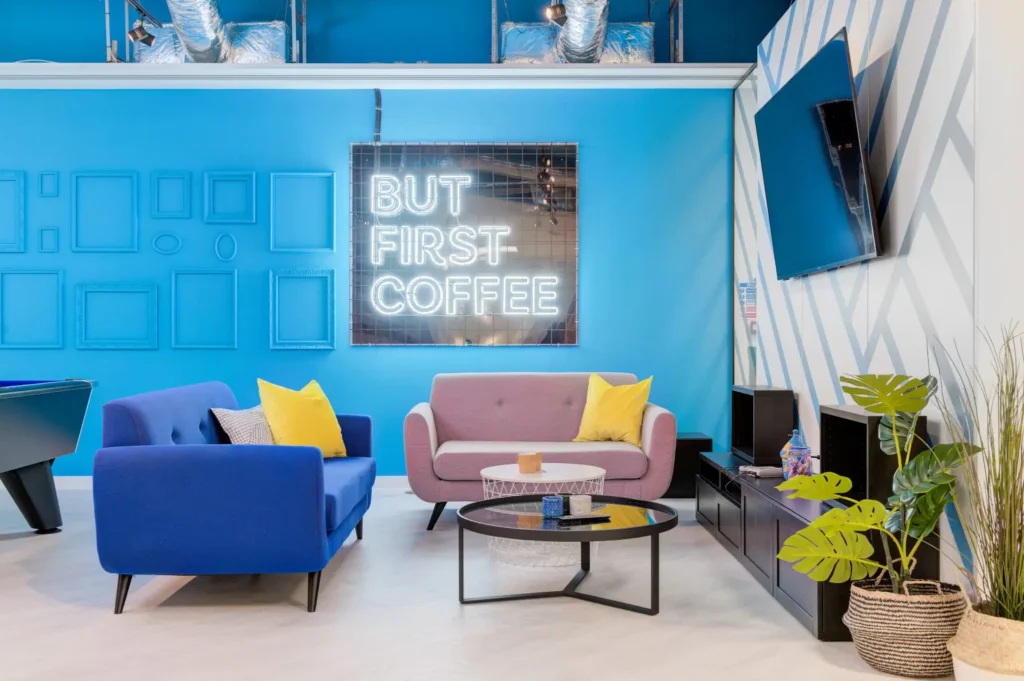
Then there’s the absence of breakout space. Modern offices love “collaboration,” which often means trying to concentrate while three separate conversations unfold nearby. People end up taking meetings in stairwells or hiding in kitchens clutching coffee mugs like emotional support props. Quiet corners, soft seating, and informal spaces are not luxuries anymore. They give people room to think, decompress, and have conversations without disturbing half the floor.
Too few meeting rooms only deepens the chaos. Every room is permanently booked, yet somehow empty half the time. Employees roam the office with laptops searching for somewhere to talk, while one team inevitably overruns its slot after claiming they are “just wrapping up.” Better booking systems and more flexible meeting areas can remove a surprising amount of daily frustration. More importantly, they stop employees wasting energy on logistics instead of actual work.
Printers remain ancient agents of psychological warfare. They work perfectly until someone urgently needs them. Then come the cryptic error messages, random flashing lights, and group troubleshooting sessions that achieve nothing except collective despair. Reliable technology may not feel exciting, but bad technology quietly drains morale every single day.
The kitchen slowly evolves into a communal crime scene. Forgotten lunches fossilise in the fridge, teaspoons disappear into another dimension, and passive-aggressive notes bloom across cupboards like office poetry. Shared spaces shape how people feel about shared responsibility. Clean, well-managed kitchens send a surprisingly powerful signal that employees are respected.
Open-plan acoustics create their own torment. Loud typers, endless calls, and people who laugh dramatically at emails become part of the daily soundtrack. Noise-cancelling headphones stop being gadgets and become survival equipment. Offices work better when they balance collaboration with privacy. People need spaces to concentrate without feeling trapped inside a live podcast recording.
Technology joins the rebellion whenever possible. The Wi-Fi collapses only during important calls, freezing everyone into awkward pixelated statues asking, “Can you hear me?” Reliable infrastructure is invisible when it works, but unforgettable when it fails. Investing in it saves time, stress, and countless unnecessary apologies.
Coffee, meanwhile, is either too strong, too weak, or mysteriously gone. It sounds laughably small, yet decent coffee and decent communal spaces create moments where people naturally connect. Culture is often built in those tiny everyday interactions rather than formal team-building exercises.
Calendars are another battlefield. “Quick catch-ups” consume entire afternoons until nobody remembers what day it is or when they last ate lunch away from a keyboard. Smarter workplaces are beginning to protect focus time and reduce unnecessary meetings because exhausted employees are rarely productive employees.
And finally, office supplies vanish with supernatural efficiency. Pens, chargers, and HDMI adapters drift into some hidden realm from which nothing returns. Small operational frustrations may seem harmless individually, but together they create constant background irritation that chips away at morale.
Most office gripes are not dramatic on their own. That is exactly why they matter. Day after day, tiny frustrations pile up like digital paper cuts. Fixing them will not magically transform a company overnight, but it creates something far more valuable: an environment where people can focus, think clearly, and work without battling the office itself before they even start their jobs.
We can’t stop people microwaving fish or your teaspoons disappearing, but we can help create a workspace that meets the needs of your team, and reduces stress in everyday life. Get in touch for a Workplace Consultation.
We can’t stop people microwaving fish or your teaspoons disappearing, but we can help create a workspace that meets the needs of your team, and reduces stress in everyday life. Get in touch for a Workplace Consultation.
Contact us