

June 8, 2026
Beyond the Ramp: Rethinking Part M in the Modern Office
By Gareth Barton
June 8, 2026
By Gareth Barton
Usually, they mean the essentials have been covered: accessible WCs, corridor widths, lift access, thresholds. The regulations have been satisfied. Boxes ticked.
But after years working in workplace design and accessibility consultancy, I’ve learned that compliance and inclusion are not the same thing. One is technical. The other is human.
Approved Document M remains a vital framework within UK building regulations, but workplaces have changed dramatically since many accessibility standards were first conceived. Today, conversations around neurodivergence, sensory processing, burnout, and wellbeing are reshaping how we think about office environments.
So the more important question has become: what is inclusive?
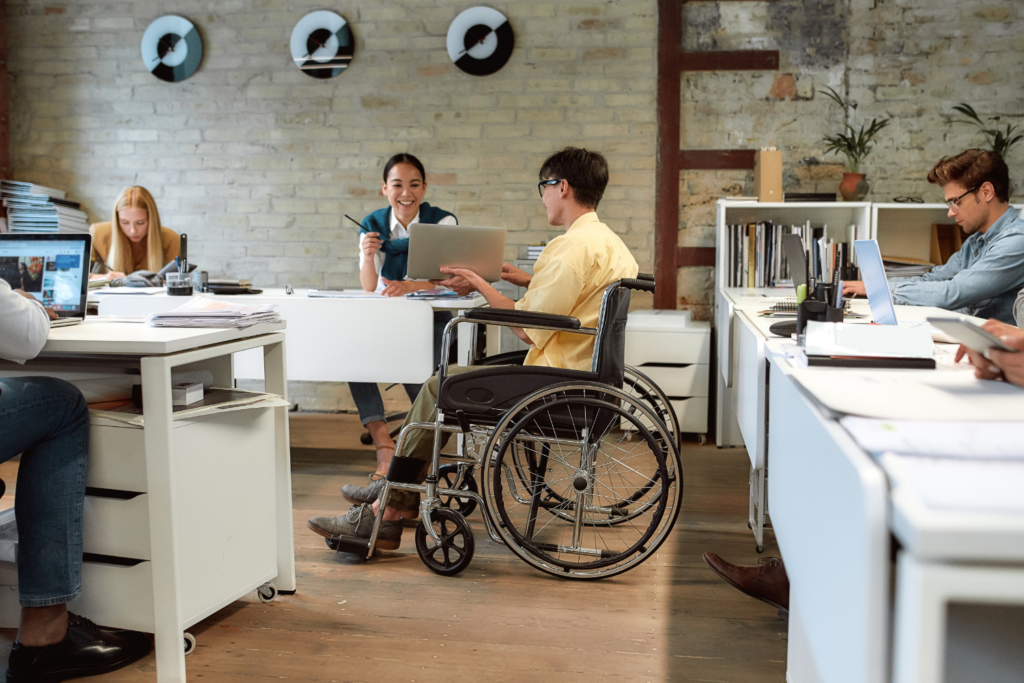
Inclusive for the wheelchair user navigating reception at peak time? For the autistic employee overwhelmed by noise and visual stimulation? For the colleague with ADHD trying to focus in an open-plan office designed around constant interaction?
Many modern offices unintentionally create environments that are exhausting to inhabit. Harsh lighting, echoing acoustics, constant notifications, crowded layouts, and nowhere to retreat can turn a workplace into a source of stress rather than support.
This is where inclusivity moves beyond regulation.
The best workplaces now recognise that people experience space differently. Rather than forcing everyone into the same environment, they create choice. That might mean multiple entry points into the office to reduce crowding and social pressure. It could mean varied textures and materials that help with orientation and sensory grounding. Increasingly, it means creating tech-free zones where employees can step away from screens and digital noise altogether.
The most inclusive offices rarely announce themselves loudly. They simply feel easier to use. The lighting feels calmer. The acoustics are softer. Wayfinding feels intuitive. There is somewhere quiet to pause without explanation.
Importantly, these design decisions rarely benefit just one group of people. Spaces designed with neurodivergence in mind often improve comfort for everyone. Parents with prams benefit from step-free access. Introverts benefit from quiet spaces. Older employees benefit from clearer visual contrast and intuitive circulation. Inclusive design is not niche design. It is thoughtful design with broader empathy.
Too often, the industry still treats Part M as the finish line. In reality, it should be the starting point. Compliance establishes minimum standards, but truly inclusive workplaces ask a deeper question:
“How does this space make people feel?”
The future of workplace design will not be defined solely by efficiency or aesthetics. It will be defined by how well offices support the full spectrum of human experience.
If you’d like to explore how your office could fully support the work of your team, going beyond legal compliance, get in touch get in touch.
If you’d like to explore how your office could fully support the work of your team, going beyond legal compliance, get in touch.
Contact us