

May 24, 2026
Office Tourism: Designing Workplaces Worth Writing Home About
By Gareth Barton
May 24, 2026
By Gareth Barton
That logic has collapsed.
In the era of hybrid work, companies are facing a new challenge: people no longer have to come into the office. Which means the office now has to earn the commute. Increasingly, designers are responding by creating workplaces that feel less like corporate infrastructure and more like destinations people actively want to experience.
This shift has sparked the rise of what many call office tourism: experience-led workplaces designed to create energy, connection, and comfort rather than simply housing desks and laptops. Alongside it comes another growing trend shaping workplace design: hotelification.
Borrowed from the hospitality world, hotelification is transforming offices into environments that feel warmer, more welcoming, and more human-centred. Reception areas now resemble boutique hotel lobbies. Lounge spaces replace sterile waiting rooms. Soft lighting, curated artwork, textured fabrics, and café-style seating are appearing everywhere. The modern office is no longer trying to feel corporate. It is trying to feel comfortable.
The goal is emotional connection. Companies want workplaces that people enjoy being in, spaces that create a sense of experience rather than obligation.
Some of the most successful ideas are refreshingly simple. Payday Pizza, for example, has become a surprisingly effective workplace ritual. Once a month, teams gather around stacks of takeaway boxes and briefly stop communicating through calendars and chat apps. Conversations happen naturally. People linger. The office feels social again rather than purely functional.
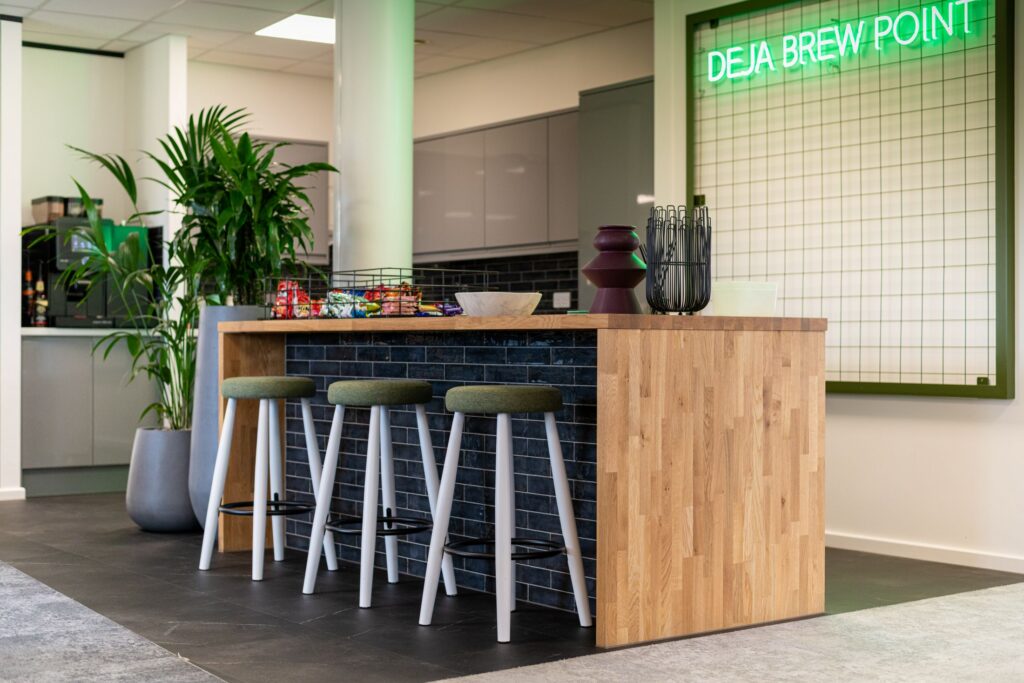
Coffee has undergone a similar evolution. Offices once treated coffee machines as basic survival equipment, often producing liquids that tasted faintly of burnt cardboard. Today, many workplaces invest in proper café-quality machines and thoughtfully designed coffee hubs because they understand something important: people gather where the coffee is good. Informal interaction often happens more naturally beside an espresso machine than in carefully scheduled collaboration sessions.
Another major trend is the rise of activity-based neighbourhoods. Instead of endless rows of identical desks, offices are being divided into zones designed around different types of work and energy levels. Quiet neighbourhoods support concentration. Social hubs encourage collaboration and conversation. Comfortable lounge areas create space for decompression, informal meetings, or moments away from screens.
This flexibility gives employees greater control over how they work throughout the day. The office begins functioning less like a rigid floor plan and more like a small ecosystem designed around human behaviour.
Alongside experience-led design comes a stronger focus on health and comfort. For years, workplace wellbeing meant little more than ergonomic chairs and a bowl of fruit near reception. Now companies are recognising how deeply physical environments influence concentration, stress, energy, and morale.
Natural light, air quality, acoustics, temperature control, and access to quiet spaces have become serious design priorities. Height-adjustable desks, wellness rooms, softer furnishings, and biophilic design all help create workplaces that feel calmer and less draining. Employees are no longer expected to adapt endlessly to uncomfortable environments. Increasingly, the environment is adapting to them.
Technology also plays an important supporting role. Wireless charging, seamless video conferencing, smart lockers, and integrated booking systems remove the tiny daily frustrations that quietly shape office experience. The best workplace technology almost disappears entirely, allowing people to focus on interaction rather than infrastructure.
What makes office tourism so interesting is that offices are no longer competing only with each other. They are competing with home. With cafés. With flexibility. With comfort itself.
That changes everything.
Employees now judge workplaces through a far more personal lens. Does this space help me focus? Does it energise me? Is it comfortable? Does it improve my day in any meaningful way?
The organisations succeeding in this new era understand that office design is no longer simply about efficiency. It is about experience, hospitality, wellbeing, and culture woven together into a place people genuinely want to return to.
Because ultimately, people rarely remember the desk they sat at. They remember how the workplace made them feel.
If you’re ready to explore what your remarkable workspace might look like, get in touch with us for a tailored, discovery call.
If you’re ready to explore what your remarkable workspace might look like, get in touch with us for a tailored, discovery call.
Contact us