

June 25, 2026
How to Reduce Office Noise: Practical Solutions for a More Productive Workplace
By Spacio Team
June 25, 2026
By Spacio Team
Noise is one of the most common frustrations in UK workplaces today, especially in open‑plan offices where sound travels easily. With the right acoustic strategy and thoughtful space planning, businesses can dramatically reduce noise, boost concentration, and improve the overall employee experience.
Take a look at some of the most effective ways to minimise office noise without needing to move, rebuild, or adopt a fully remote working policy.
Before investing in products or materials, the most impactful step is often reconfiguring the layout. Our interior designers can work with you to review your current workspace, what you feel works and what maybe doesn’t, and provide an alternative space plan (General Arrangement) to suit your needs.
✅ Zoning the workspace
As part of the space planning process we’ll look to create clear zones for:
Focus work: quieter areas away from circulation paths
Collaboration: spaces intentionally designed for conversation
Social and breakout areas: located away from desks to reduce spillover noise
Good zoning helps reduce the biggest cause of disruptions: conversations happening too close to focused workers.
✅ Separating noisy and quiet functions
We’ll assess naturally louder activities (e.g., team huddles, kitchen areas, printers, touchdown spaces) and move them away from deep‑focus zones.
✅ Improving desk orientation
Simple changes like turning desks away from walkways, removing long “echo corridors,” and placing storage between rows can reduce sound travel dramatically.
✅ Adding micro‑environments
We’ll consider introducing varied spaces e.g. phone booths, quiet corners, collaborative nooks, so your team don’t have to rely on open desk areas for every task.
Space planning is often the most cost‑effective way to manage noise because it tackles the issue at source.

Acoustic panels remain one of the most practical and efficient ways to reduce reverberation and echo in offices. When placed strategically, they reduce reflected sound, improve speech clarity, and minimise noise spread across open spaces.
Our design and build team often use them on walls, ceilings, especially within meeting rooms and in large, hard‑surfaced areas.
Panels are available in countless colours and finishes, making them an excellent way to merge acoustic performance with interior design.
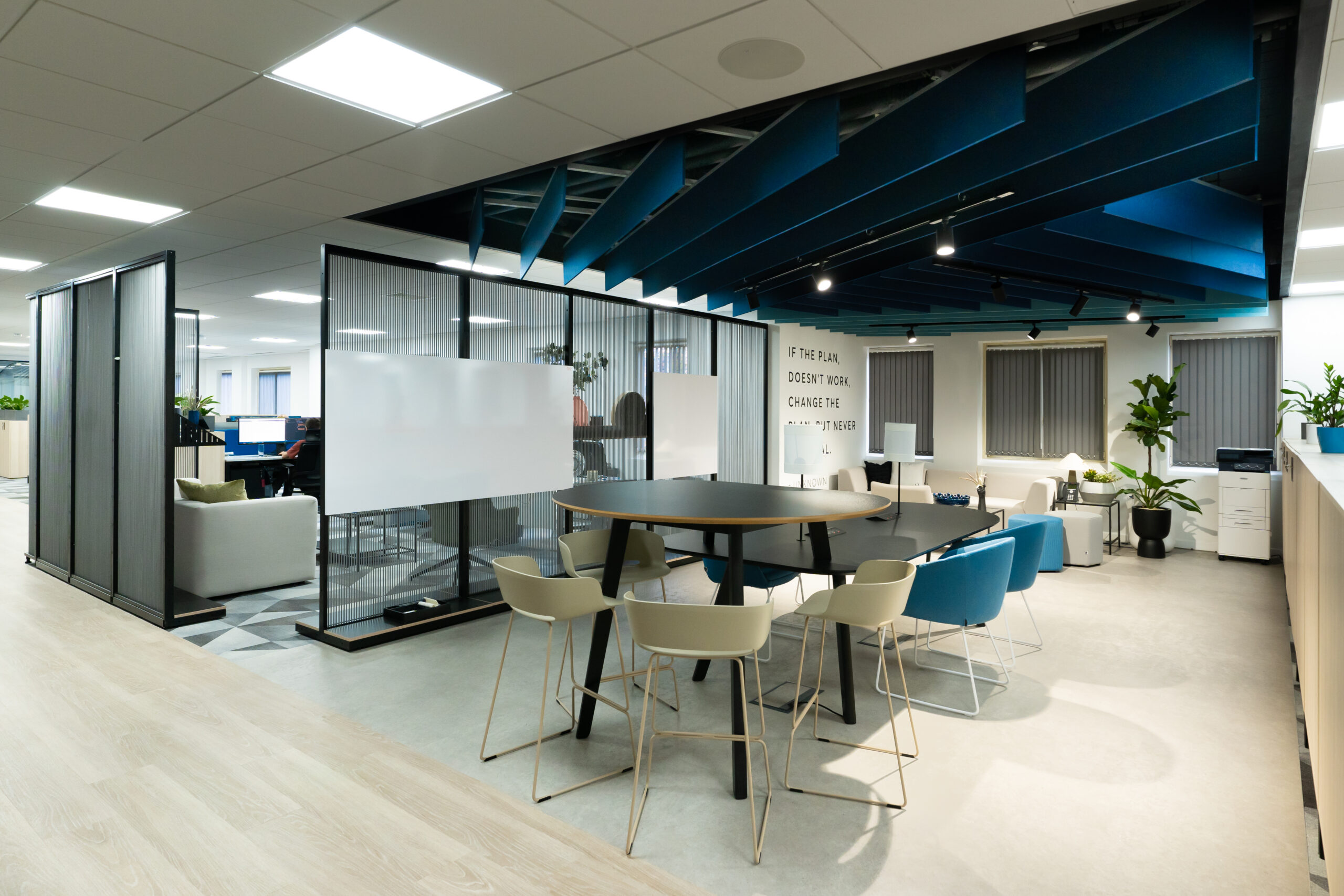
Many UK offices, especially refurbished industrial or heritage buildings, have tall ceilings that amplify noise. Acoustic baffles, hung vertically from above, are ideal for:
1.Reducing echo in large volumes
2. Breaking up sound paths
3. Adding texture and visual interest
They’re lightweight, customisable, and highly effective without taking up floor space.
Furniture designed with noise management in mind can have a big impact on day‑to‑day comfort.
✅ High‑back seating & acoustic sofas
Perfect for small conversations, private catch‑ups and informal collaboration.
✅ Sound‑absorbing desks and screens
Materials like felt, PET, or fabric‑wrapped screens soften sound and create pockets of quiet.
✅ Soft furnishings
Rugs, carpets, curtains and upholstery reduce reverberation by absorbing ambient noise instead of reflecting it.
A few carefully selected pieces can transform an acoustically harsh office into a calmer, more comfortable space.
Acoustic pods provide an instant solution for:
1. Private calls
2. Virtual meetings
3. Heads‑down work
4.Sensitive discussions
They’re modular, movable, and far cheaper than building new rooms. Most modern pods come with:
1. Ventilation
2. Power outlets
3. Good lighting
4. High‑quality sound insulation
Providing staff with private, bookable spaces reduces the pressure on open areas and significantly reduces noise spill.
Effective noise management is rarely achieved through a single fix. The best office acoustic strategies blend:
1. Thoughtful space planning
2. Targeted acoustic materials
3. Supportive furniture choices
4. Flexible pods and quiet zones
This layered approach creates a balanced environment that supports both collaboration and focus, without compromising on office culture.
How we can help?
Office noise is a real productivity challenge, but with smart space planning, effective acoustic materials and office furniture, companies can create environments that support clear thinking, reduce stress and make the office a place where people genuinely want to work.
We can provide workplace consultancy and space planning services to reconsider and reconfigure your workplace. Get in touch
We can provide workplace consultancy and space planning services to reconsider and reconfigure your workplace. Get in touch.
Contact us